
Advanced Spectroscopy Instruments

Spectroscopy instruments analyze the interaction between matter and electromagnetic radiation. They provide precise measurements critical for research and development.

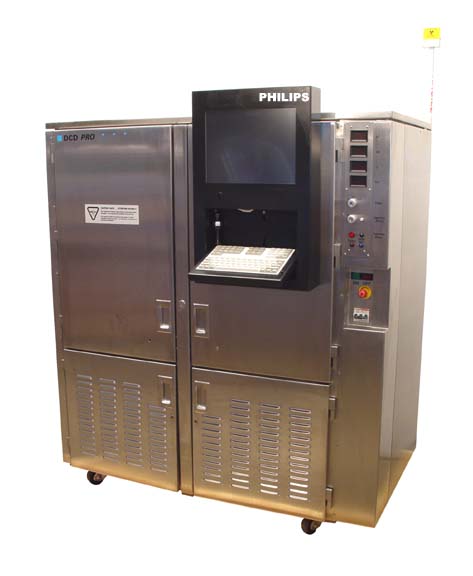
  1. PHILIPS DOUBLE CRYSTAL DIFFRACTOMETER

    Xray Diffractometers

    PHILIPS DOUBLE CRYSTAL DIFFRACTOMETER

    Double Crystal Diffractometer Double Crystal Diffractometer optimized for fast rocking curve analysis of pseudomorphic epitaxial layer structures.

Common Applications

Pharmaceutical Analysis

Environmental Monitoring

Food Quality Testing

Forensic Investigations

Biotechnology Research

Materials Science

Buying Guide

Buying Guide

  • Determine the specific type of spectroscopy needed for your application.
  • Consider the brand reputation and support services.
  • Evaluate the instrument's sensitivity and accuracy specifications.
  • Assess the integration capabilities with existing lab systems.

Frequently Asked Questions

What types of spectroscopy instruments are available?
The range includes UV-Vis spectrometers, near-infrared (NIR) spectrometers, Fourier-transform infrared (FTIR) spectrometers, mass spectrometers, and Raman spectrometers, each serving specific analytical needs in various scientific fields.
How do spectroscopy instruments work?
Spectroscopy instruments measure the light absorbed, emitted, or scattered by materials, helping to determine chemical compositions, molecular structures, and physical properties.
What brands offer high-quality spectroscopy instruments?
Leading brands include Thermo Fisher Scientific, Agilent Technologies, PerkinElmer, Bruker, and Shimadzu, known for their reliable and advanced spectrometry solutions.
What are common applications of spectroscopy instruments?
Applications span pharmaceuticals, environmental analysis, food quality control, forensic science, biotechnology, and materials science research.