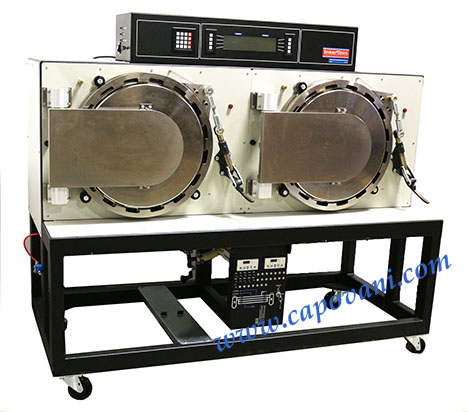
What industries use fermentation and reaction equipment?
Fermentation and reaction equipment are widely used in industries such as pharmaceuticals, biotechnology, food and beverage production, and chemical manufacturing. These industries rely on precise biochemical processes to produce medications, enhance food products, develop sustainable biofuels, and synthesize chemicals.
How do fermentation systems differ from reaction systems?
Fermentation systems primarily focus on biological processes involving microorganisms to convert substrates into products, while reaction systems often involve chemical reactions without biological agents. Both systems are designed to optimize specific reactions and maintain controlled environments.
What are some key features to look for in fermentation equipment?
Key features include temperature control, pH monitoring, agitation systems, scalability, and material compatibility. Advanced models may also offer automation for precise process control and enhanced efficiency.
How does a bioreactor work?
A bioreactor provides a controlled environment where biological reactions occur. It maintains optimal conditions such as temperature, pH, and oxygen levels to support the growth and activity of microorganisms or cells, facilitating efficient production of desired products.