Profilometers

Profilometers are precision instruments used to measure surface roughness and contour. They ensure optimal accuracy and reliability in metrology applications.

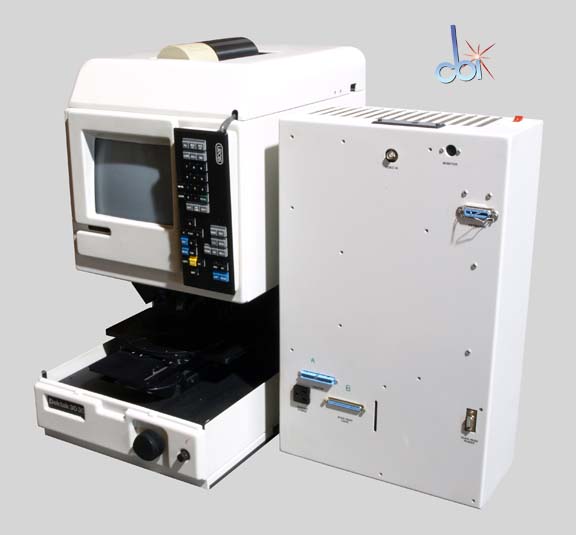
  1. VEECO PROFILOMETER

    Profilometers

    VEECO PROFILOMETER

    Profilometer

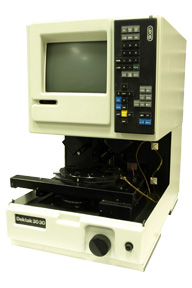
  2. VEECO PROFILOMETER

    Profilometers

    VEECO PROFILOMETER

    Profilometer

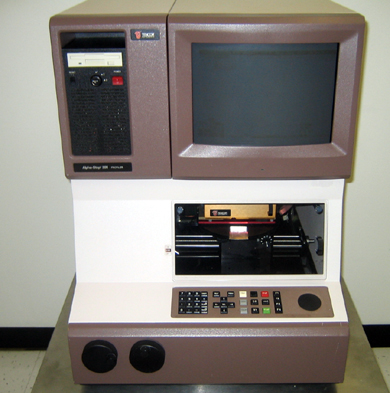
  3. KLA-Tencor AlphaStep 300 Profilometer

    Profilometers

    KLA-Tencor AlphaStep 300 Profilometer

    Profilometer
  4. KLA-TENCOR HRP-240 High Resolution Profiler

    Profilometers

    KLA-TENCOR HRP-240 High Resolution Profiler

    KLA-TENCOR HRP-240 High Resolution Profiler

    • Cassette to Cassette Wafer Handling for up to 200mm Wafers
    • Previously Configured for SMIF Wafer Handling
    • Please Inquire for Additional Details

Common Applications

Surface roughness measurement

Contour analysis

Semiconductor inspections

Automotive surface checking

Tool wear analysis

Material science research

Buying Guide

Profilometer Buying Considerations

  • Determine if contact or non-contact methods suit your surface type.
  • Consider the resolution and accuracy based on measurement needs.
  • Assess the compatibility with existing analysis software.
  • Evaluate the maximum scan area and speed required.
  • Examine the maintenance requirements and service support from the manufacturer.

Frequently Asked Questions

What is a profilometer used for?
A profilometer is used to measure the surface roughness and contour of a material, ensuring precise control in manufacturing and quality assurance.
What are the types of profilometers?
Profilometers can be classified into contact, non-contact, optical, and tactile types depending on their measurement method.
How do optical profilometers differ from contact profilometers?
Optical profilometers use light to measure surfaces, avoiding direct contact, while contact profilometers physically trace the surface with a stylus.
Can profilometers measure 3D surfaces?
Yes, 3D profilometers provide detailed analyses of complex surfaces by capturing height profiles across a surface area.