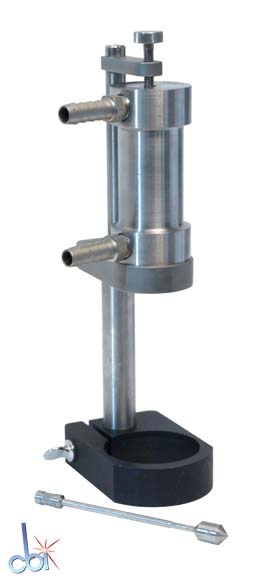
Viscometers are devices used to measure the viscosity of fluids accurately. They ensure consistent and reliable fluid behavior analysis in laboratory settings.
Viscometers
BROOKFIELD ACCESSORIES
Viscometer Accessories
Viscometers
BROOKFIELD SC4-6
Water Jacketed Small Sample Chamber
Common Applications
quality assurance in food processing
oil and lubricant analysis
pharmaceutical formulation
cosmetic product testing
polymer and resin production
paint and coating formulation
Buying Guide
Viscometer Buying Considerations
Determine the viscosity range your samples require to ensure compatibility.
Consider whether you need a portable or bench-top model for your laboratory space.
Evaluate the temperature control capabilities for precise measurements.
Check the ease of operation and data output options for efficiency.
Ensure compatibility with the specific viscosity measurement standards applicable to your industry.
Frequently Asked Questions
What are viscometers used for?
Viscometers are used to determine the viscosity of fluids, crucial for applications in quality control and product development.
How does a rotational viscometer work?
A rotational viscometer measures viscosity by rotating a spindle at known speeds within a fluid and analyzing the resistance to rotation.
What is the difference between capillary and rotational viscometers?
Capillary viscometers measure viscosity by flowing fluid through a narrow tube, whereas rotational viscometers use a rotating spindle to measure resistance.
Can viscometers be used for high-viscosity fluids?
Yes, specific viscometers, such as those with cone-plate designs, are suitable for measuring high-viscosity fluids.