
X-ray Diffractometers

X-ray diffractometers are specialized instruments used to determine the crystallographic structure of materials. They enhance research quality by providing accurate and reliable data on material properties.

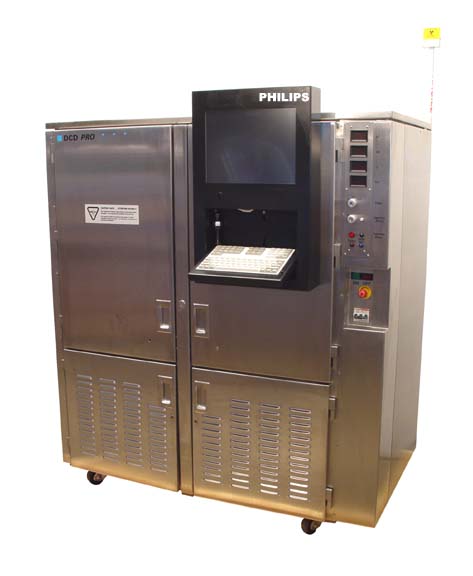
  1. PHILIPS DOUBLE CRYSTAL DIFFRACTOMETER

    Xray Diffractometers

    PHILIPS DOUBLE CRYSTAL DIFFRACTOMETER

    Double Crystal Diffractometer Double Crystal Diffractometer optimized for fast rocking curve analysis of pseudomorphic epitaxial layer structures.

Common Applications

pharmaceutical research

material science

mineralogy

chemistry

nanotechnology

semiconductor research

Buying Guide

X-ray Diffractometer Buying Considerations

  • Determine the specific analysis requirements for your research.
  • Consider the available sample stages and their compatibility with your materials.
  • Evaluate the resolution and speed of the diffractometer.
  • Check for software capabilities that facilitate data interpretation.
  • Assess the availability of customer support and training resources from the manufacturer.

Frequently Asked Questions

What materials can be analyzed with X-ray diffractometers?
X-ray diffractometers can analyze a wide range of crystalline materials to determine their structural properties.
How does an X-ray diffractometer work?
It works by directing X-rays at a material and measuring the angles and intensities of the X-rays that are scattered by the atoms within the material.
What are the benefits of using X-ray diffractometers?
They provide detailed insights into material properties, which are essential for research and development in various scientific fields.
Can surplus X-ray diffractometers be reliable for research?
Yes, well-maintained surplus X-ray diffractometers can offer cost-effective solutions without compromising on data accuracy.