
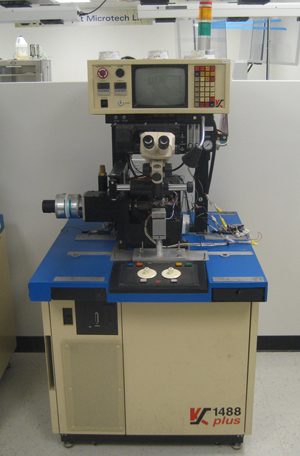
Automatic Ball Bonders
Automatic ball bonders are specialized machines used for making electrical connections in semiconductor devices. They ensure precision and reliability in high-volume semiconductor manufacturing processes.
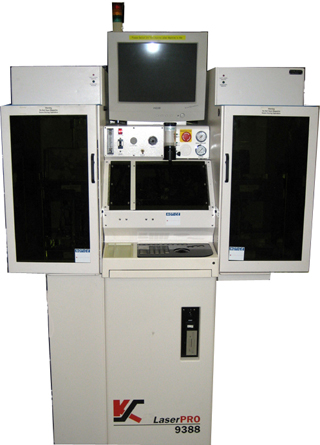
Popular Manufacturers
Common Applications
semiconductor device assembly
microelectronics packaging
integrated circuit manufacturing
LED module production
RFID chip bonding
MEMS device fabrication
Frequently Asked Questions
What are automatic ball bonders used for?
They are used to make precise electrical connections on semiconductor devices, typically employing thin gold or copper wire.
How do automatic ball bonders differ from wedge bonders?
Ball bonders use a ball bonding technique, suitable for complex and high-density connections, whereas wedge bonders use a wedge-shaped tool for simpler connections.
What materials are commonly used in ball bonding?
Gold and copper wires are commonly used due to their excellent conductivity and bonding properties.
Which industries benefit from automatic ball bonders?
They are essential in semiconductor manufacturing, electronics, aerospace, and automotive industries for assembling intricate electronic components.
Log in with your username/email address