
Manual Eutectic Die Bonders

Manual eutectic die bonders are specialized devices used in electronics manufacturing to attach semiconductor dies to substrates using eutectic bonding techniques. They ensure precision and reliability in high-performance electronics assembly.

  1. MECH-EL EUTECTIC DIE BONDER

    Manual Eutectic Die Bonders

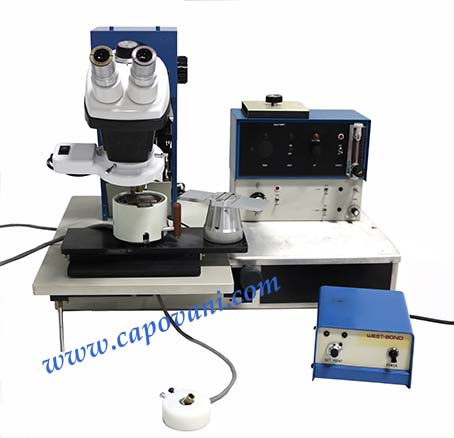
    MECH-EL EUTECTIC DIE BONDER

    The Mech-El/MEI 709 is a manual eutectic die attacher.  The machine comes with a  2 position slide table for die presentation and heated work holder.  The MEI 709 uses a unique hot gas head that allows the user to heat the package to a temperature below the wetting temperature of the solder and use the hot gas to bring the localized heat to only the die area to wet the solder or perform.

Common Applications

semiconductor manufacturing

telecommunications

aerospace electronics

research and development

medical devices

industrial electronics

Buying Guide

Manual Eutectic Die Bonders Buying Considerations

  • Evaluate the temperature range to ensure compatibility with your materials.
  • Check for precision alignment features to handle delicate components.
  • Consider the ease of use and operator training requirements.
  • Identify maintenance needs and the availability of replacement parts.
  • Assess the bonding speed and throughput to meet your production demands.

Frequently Asked Questions

What are manual eutectic die bonders?
Manual eutectic die bonders are tools used to attach semiconductor dies to substrates through eutectic bonding, a process crucial for precision electronic assemblies.
Why is eutectic bonding important?
Eutectic bonding is important because it provides strong and reliable attachments necessary for high-performance electronic components.
What industries use manual eutectic die bonders?
Industries such as semiconductor manufacturing, aerospace, and telecommunications use manual eutectic die bonders for precision assembly of electronic components.
How do I choose the right manual eutectic die bonder?
Consider factors like bonding temperature requirements, substrate compatibility, and precision levels needed for your specific applications.